

Disclaimer: The views expressed here are my own and do not reflect those of my employer or any affiliated organizations.
By one of those random coincidences of life (and thanks to the kindness of a friend), I was invited to provide my opinion on a comparative news report between Waterloo’s ION LRT and TTC Line 6 Finch West LRT. Therefore, I found it fitting to use this space to delve a bit deeper into the project’s infamously slow beginnings and the hopeful future of this transit line. Welcome.
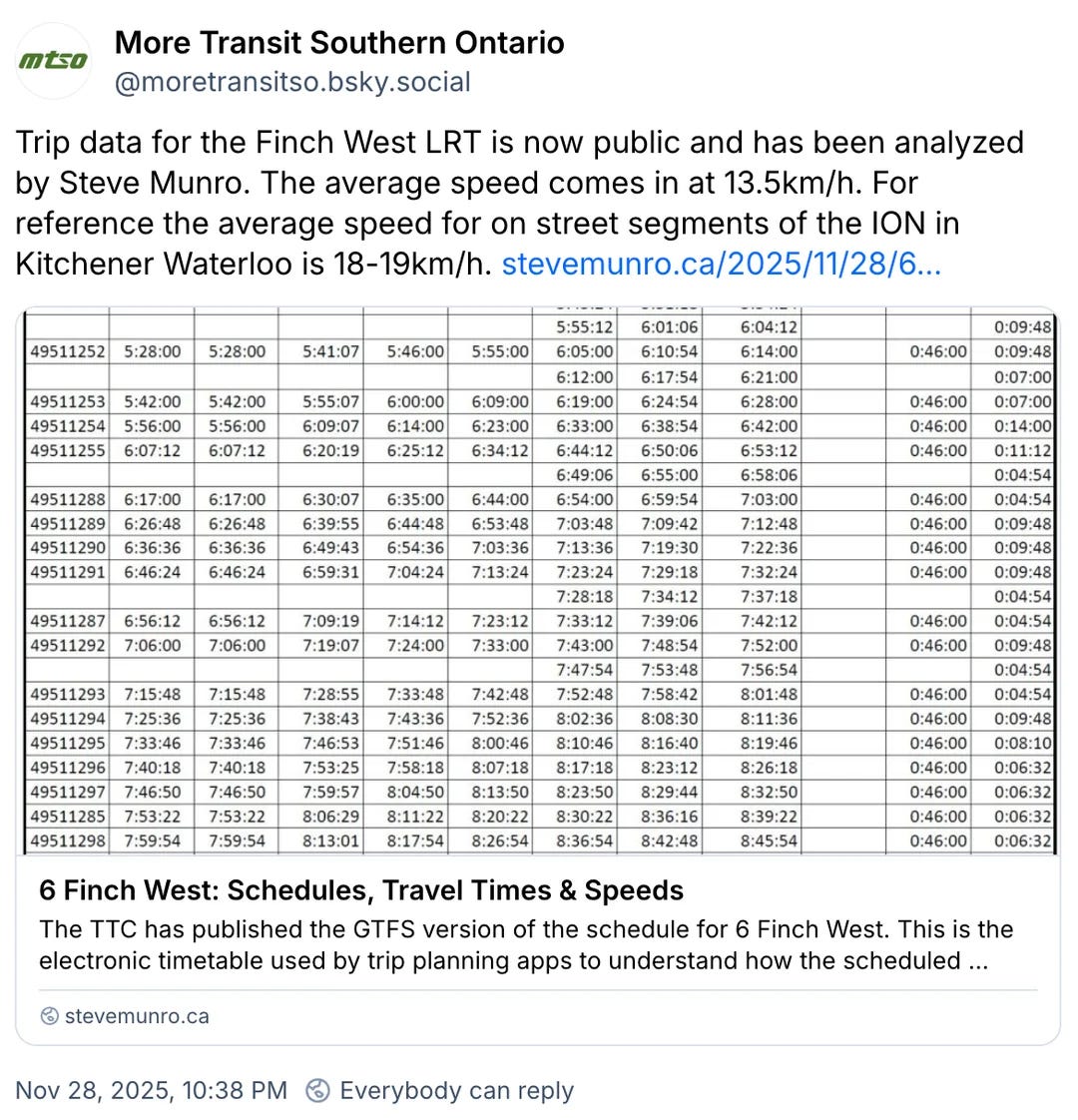
Last December, Toronto’s Line 6 (Finch West LRT) opened to what I’d describe as an ‘appropriate’ level of fanfare. It’s no secret that this project comes at a sadly very ironic time. Having started construction years after Line 5 (Eglinton LRT), yet managing to open before the infamously delayed crosstown project. Beyond this, and the sad reality that this suburban stroad-running LRT still managed to be both fairly over budget and delayed, the crux of this article lies in something the public could have only realized upon its launch: It is terribly slow.
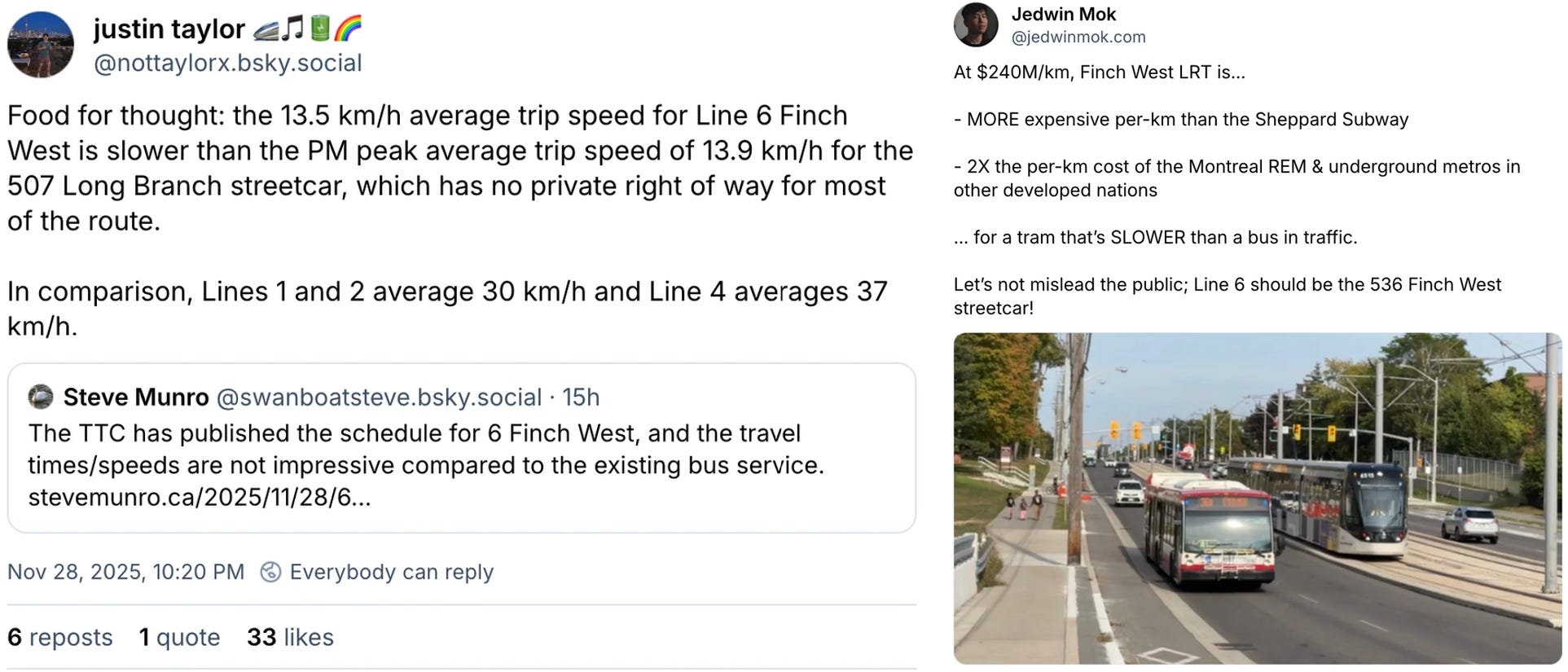
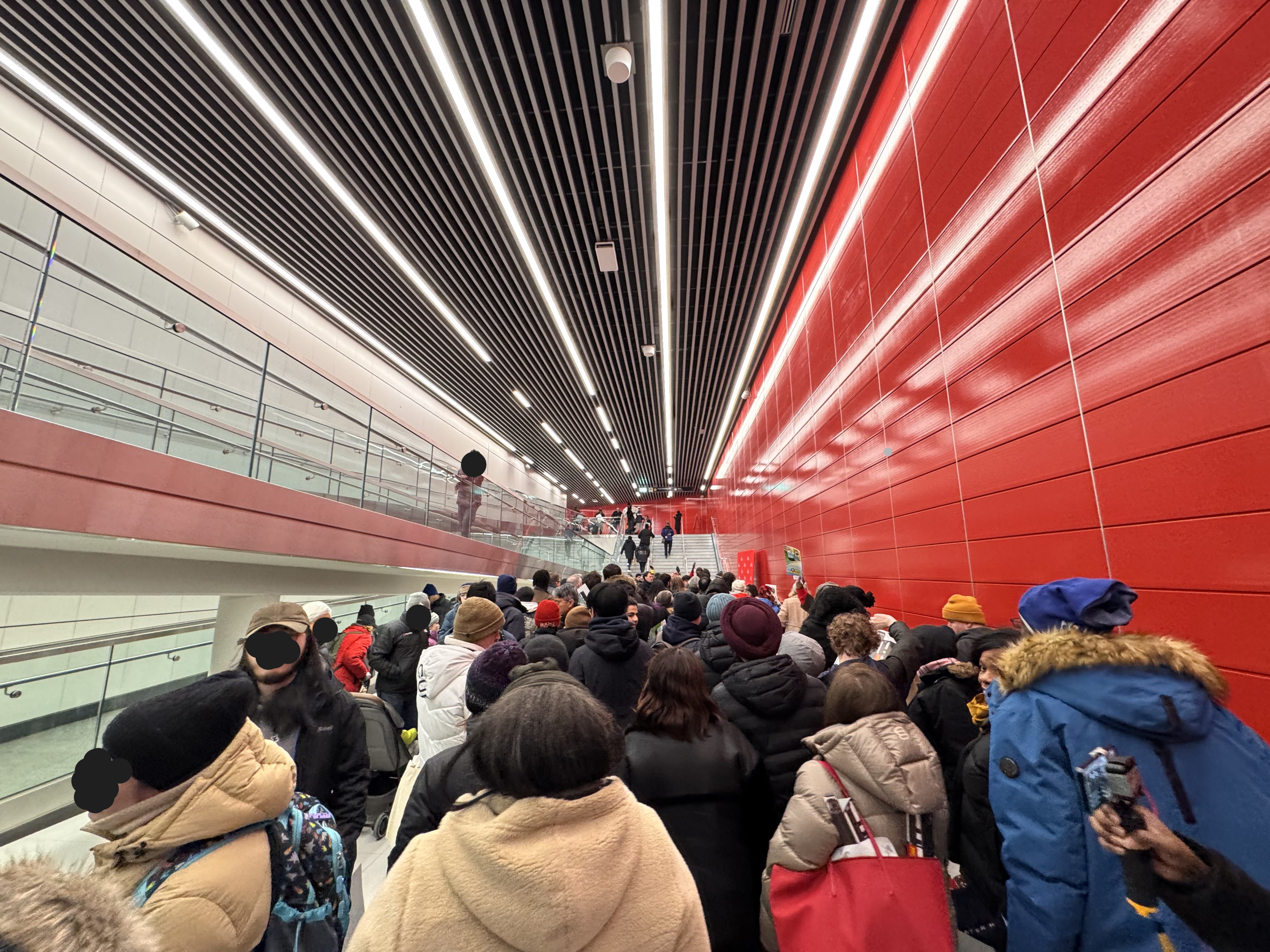
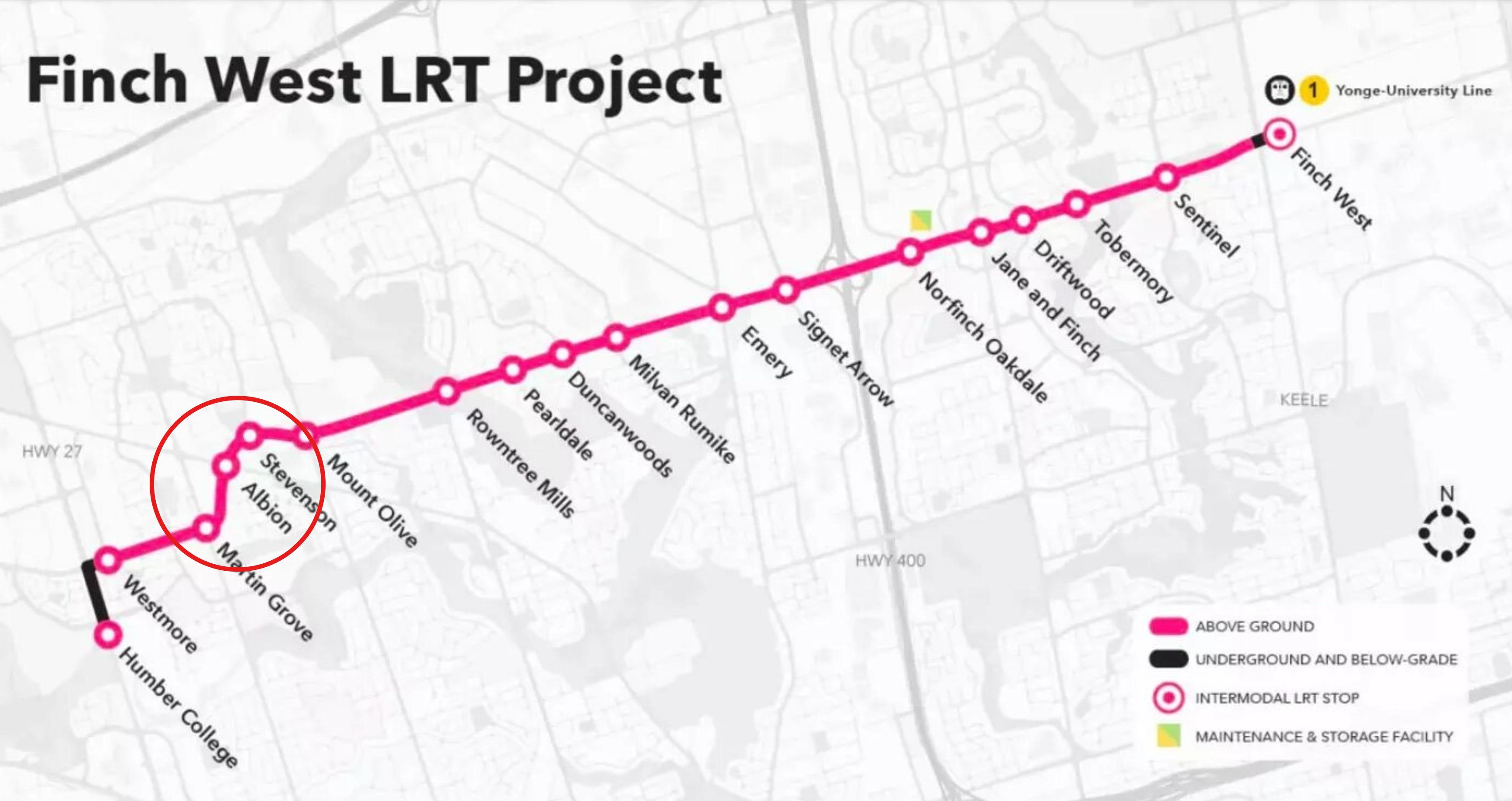
When comparing Line 6 to systems like Waterloo’s ION, a lot of the differences come down to early planning and design choices. One of the clearest examples is station spacing. ION generally has wider distances between stops, which allows trains to reach and maintain higher speeds between stations. On Finch West, stops are generally much closer together. Near Albion Mall, for instance, there are three stations within roughly 850 metres, meaning trains barely have time to accelerate before having to slow down again. That alone adds up quickly over the length of the line.
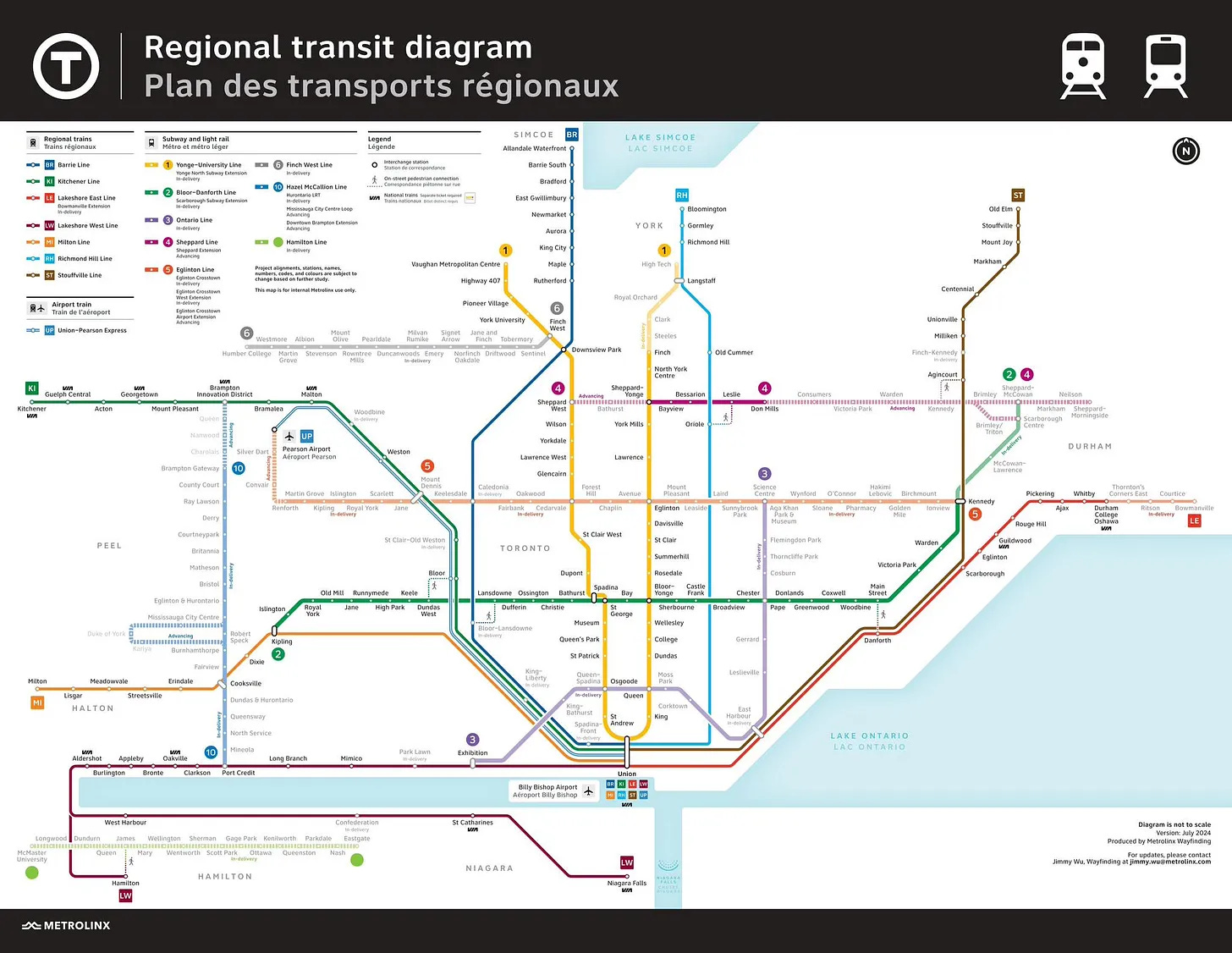
Boarding the first in-service train on opening day (having woken up at an ungodly hour), I found it funny when I looked at many of the maps inside the LRT Trains. Metrolinx’s lovely new (vertical) regional rapid transit map places Line 6’s terminus of Humber College (now Humber Polytechnic) right next to Kitchener GO.
But after riding the line, a sad realization dawned on me. Whether it was a conscious decision or an unrelated design choice. The travel time to/from Union Station from both these termini, despite their massive distance disparity, is actually quite similar.
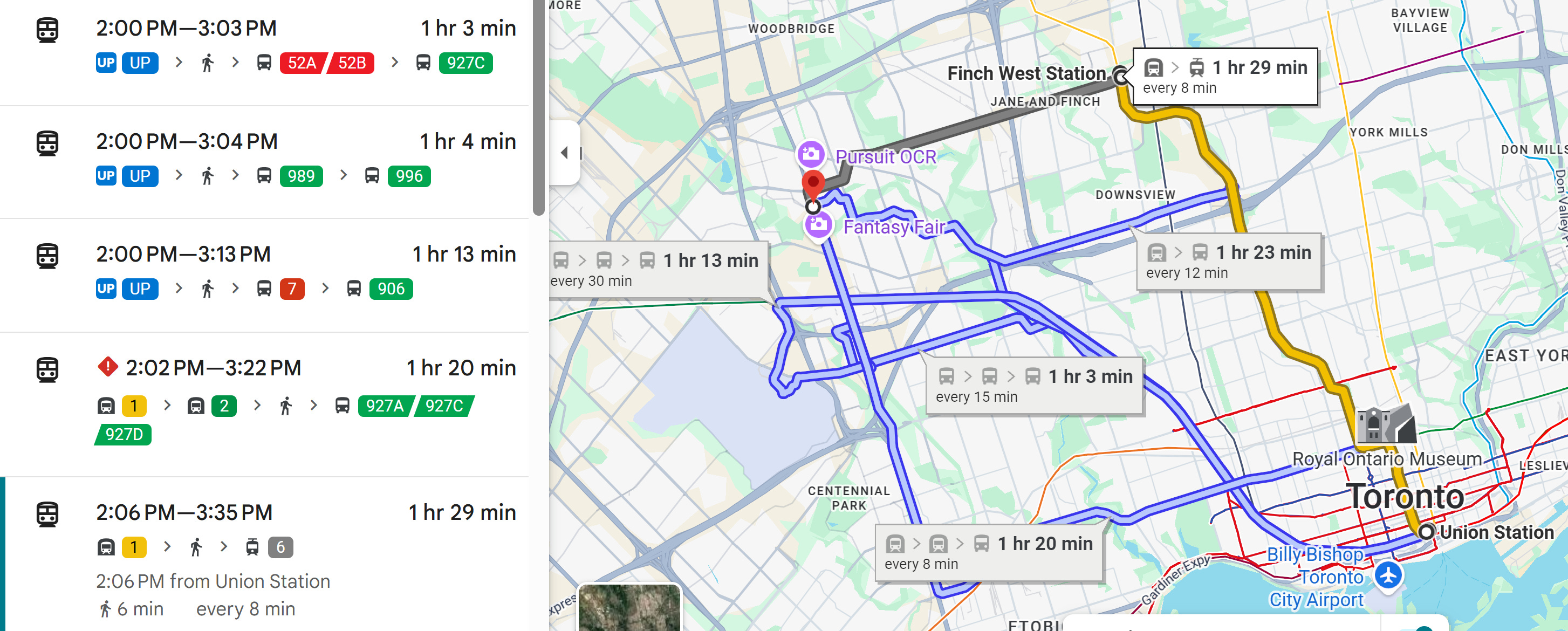
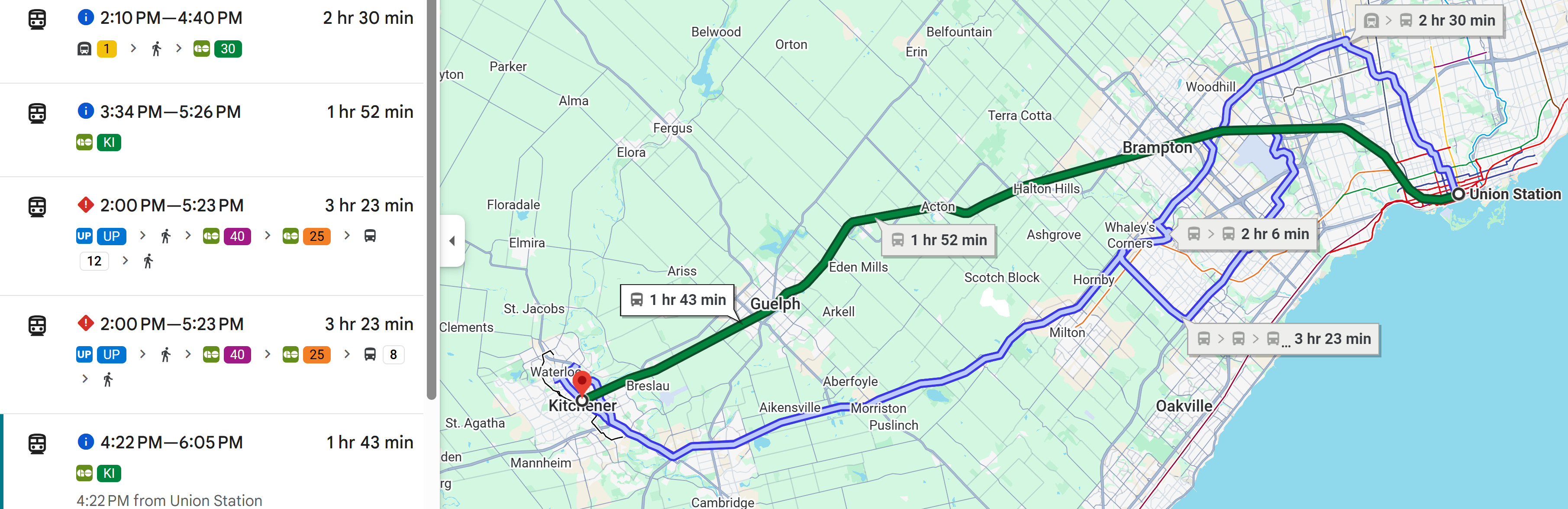
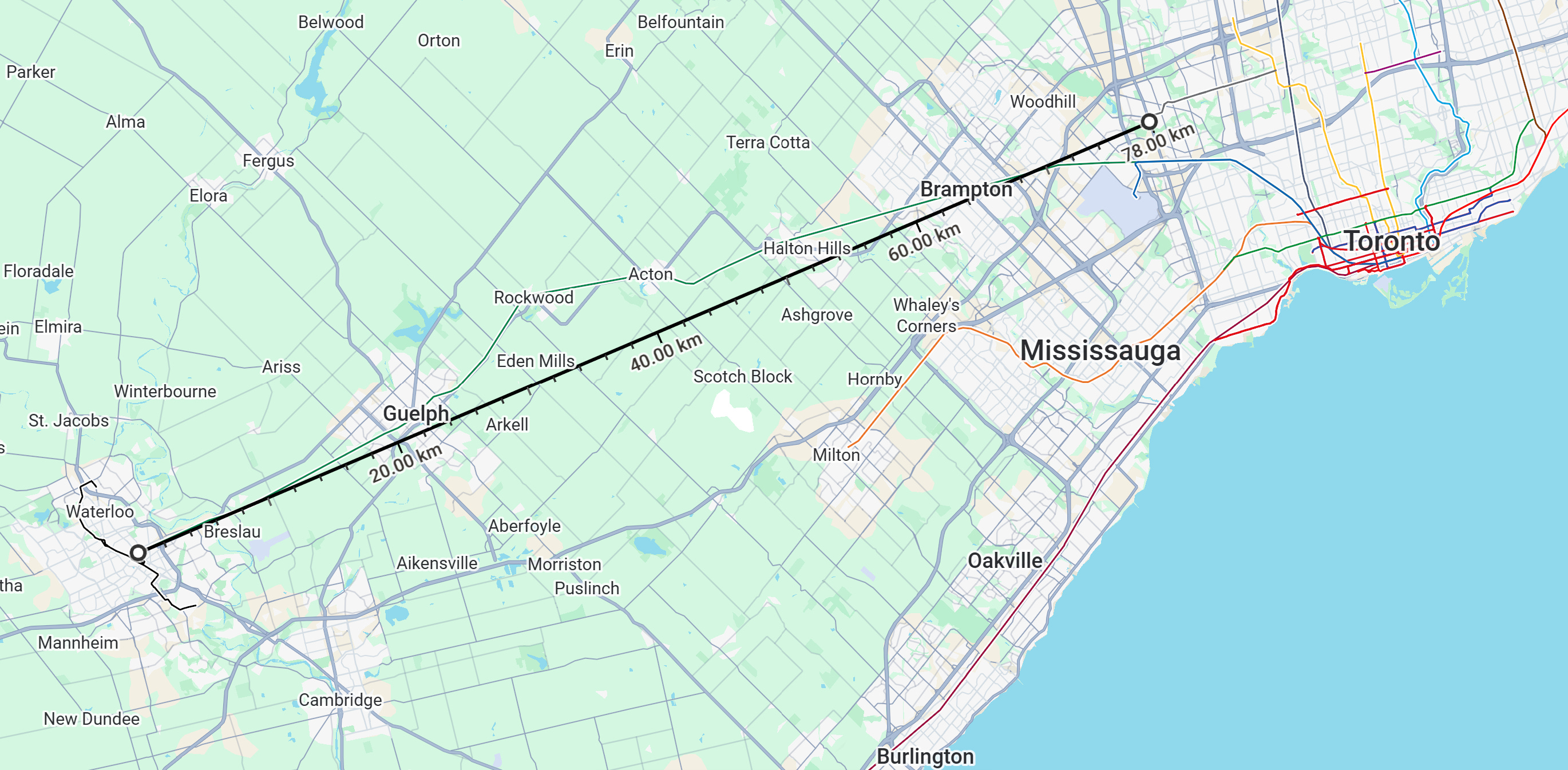
Now, of course, we shouldn’t expect a street-running LRT to reach the speed of a regional train, and at the same time, the Kitchener GO train line struggles a fair bit with slower-than-ideal operations, given the old railway alignment and ownership of the tracks by Canadian National (CN) in key stretches.
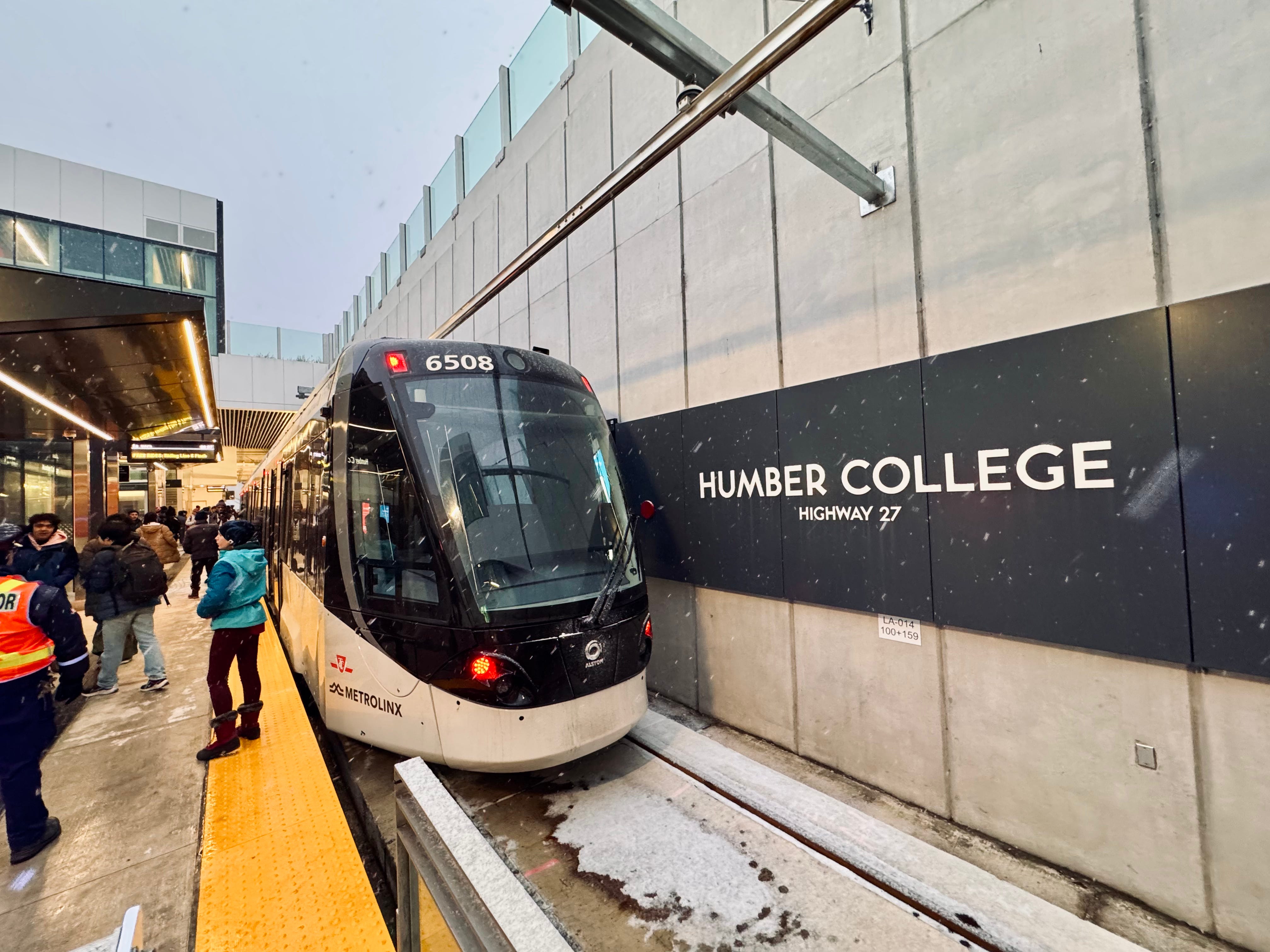
But the problem still stands and is truly a concerning one. Toronto just launched a brand new urban rapid transit line right through some of the city’s most socioeconomically disadvantaged areas, and it kind of… disappoints.
It really does not have to be like that, though. Many issues are indeed ‘baked in’, but in my view, it actually has a lot of potential. I would argue most professionals in the planning & transportation industries here would at least be able to picture a scenario where it could be decent (as far as a suburban LRT goes). Moreover, one can hope that the operational quirks are indeed ‘ironed out’, this being particularly important for the snow clearing, track switches, and CBTC signalling-related delays of Line 6’s operations.
So if operational quirks can be worked through, then why is this speed and reliability conversation so important? Well, it seems that Toronto is facing yet another ideological fight between the ‘ol way we’ve always done things and the ideation of what our city (and region) could look like.
Despite it being relatively complicated, much of the disappointment of this line ties to the fact that Transit Signal Priority (TSP) is a politically controversial topic in city council chambers. This is in part due to its nearly magical ability to trigger angry NIMBY opposition, as if making small changes of a few seconds to traffic light cycles would single-handedly break the city’s entire road network into utter mayhem. The goal of this technology is to allow trains to pass through intersections without stopping.
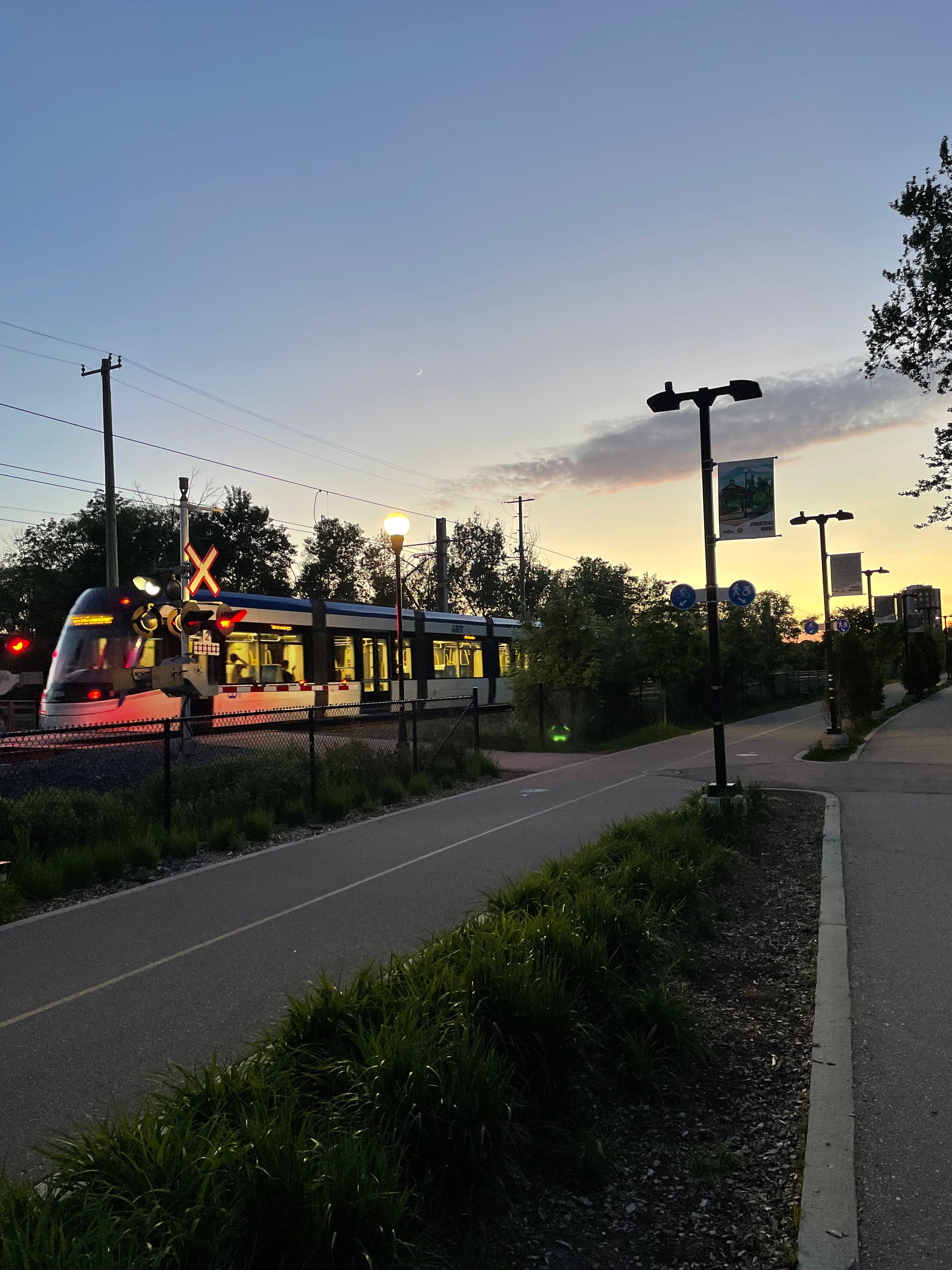
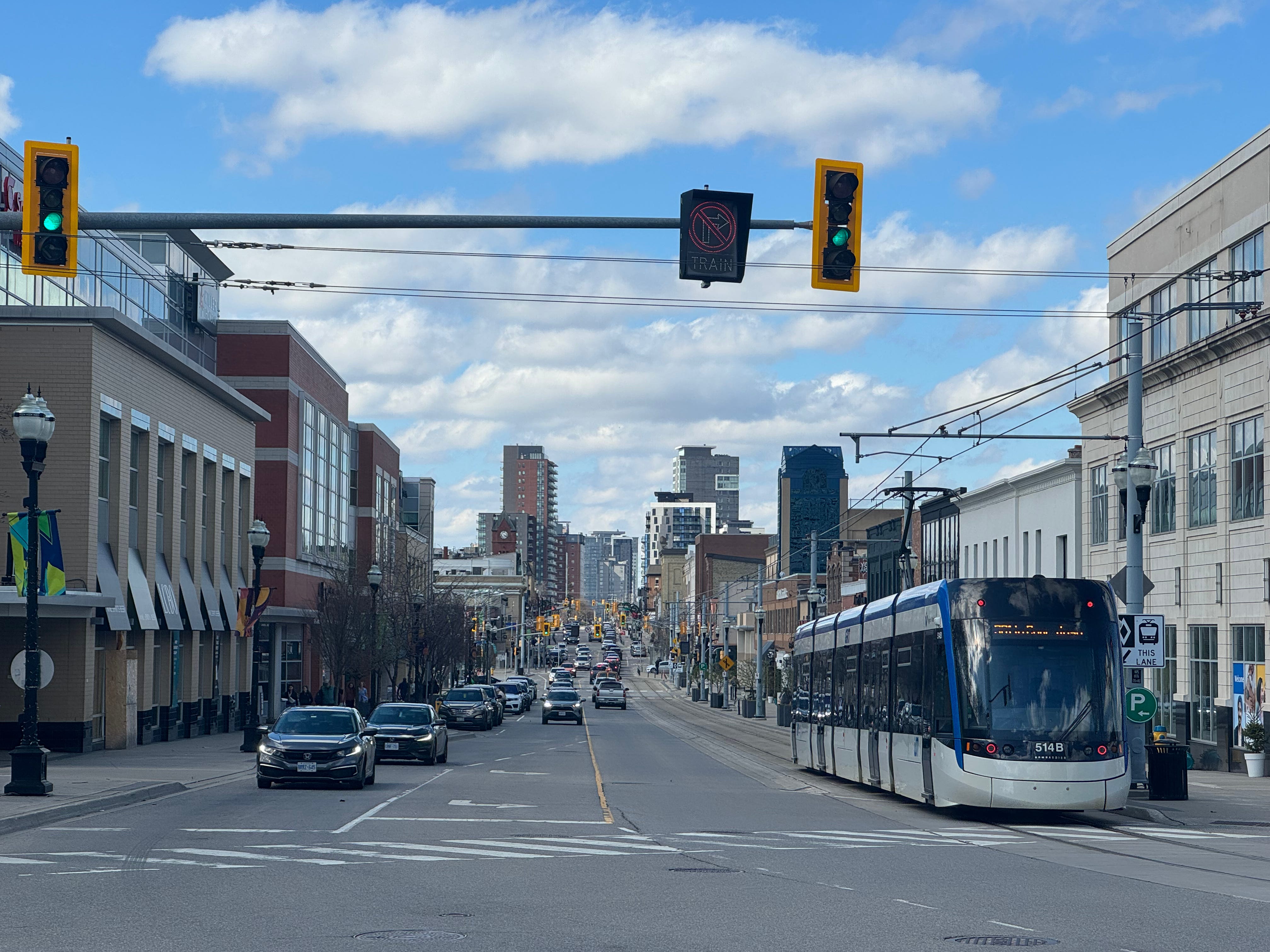
Waterloo’s ION LRT zooming on a snowy day, approaching a major intersection and station (Video Credits: Self)
On that note, ION made the conscious decision to implement Transit Signal Priority from the very beginning. This was not treated as an optional enhancement or as much of a politically risky experiment, but as a core operational requirement for making street-running rapid transit function properly. While there does seem to be growing political will in Toronto to implement signal priority, it is important to acknowledge that this was never a given, and that retrofitting it later is always more complicated than building it in from day one.
That said, it is also important to be realistic. While Transit Signal Priority is absolutely necessary, it is not a silver bullet. It cannot fully undo the consequences of station spacing, alignment choices, or overly conservative operating rules. Much of what we are seeing today on Line 6 is the result of decisions that were locked in well over a decade ago.
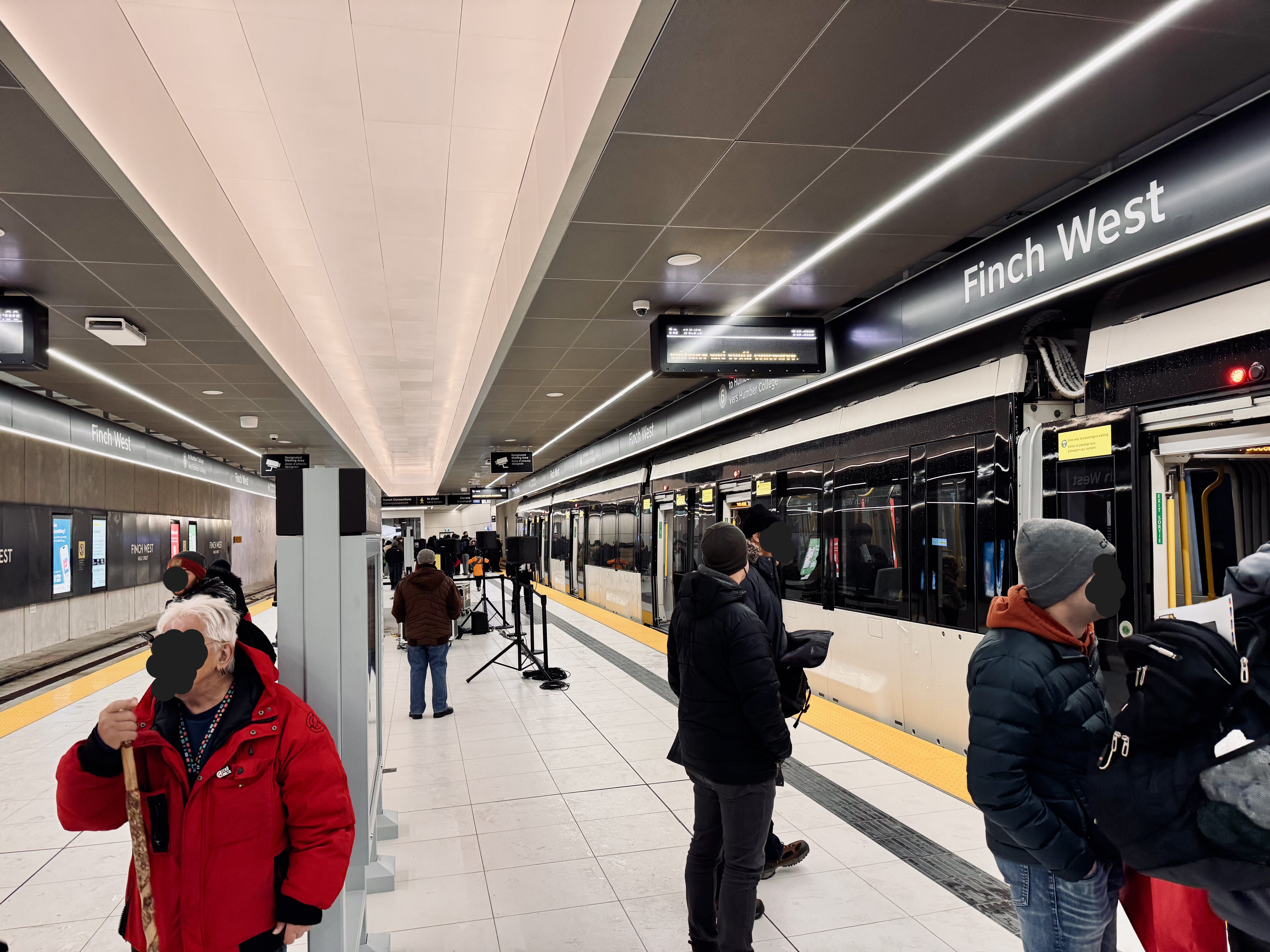
A Line 6 vehicle arriving at a station on a snowy day (Video Credits: Self)
On the other hand, there are what are called “speed caps”. Artificial speed limits that the City of Toronto sets up to make vehicles go slower than the speed at which the tracks are designed to allow. In all fairness, these speed caps can serve important roles, and in the best-case scenario, they ensure reliability and safety in operations. But in the case of Finch, it really does seem a bit more of a fearful protection than a substantiated concern.
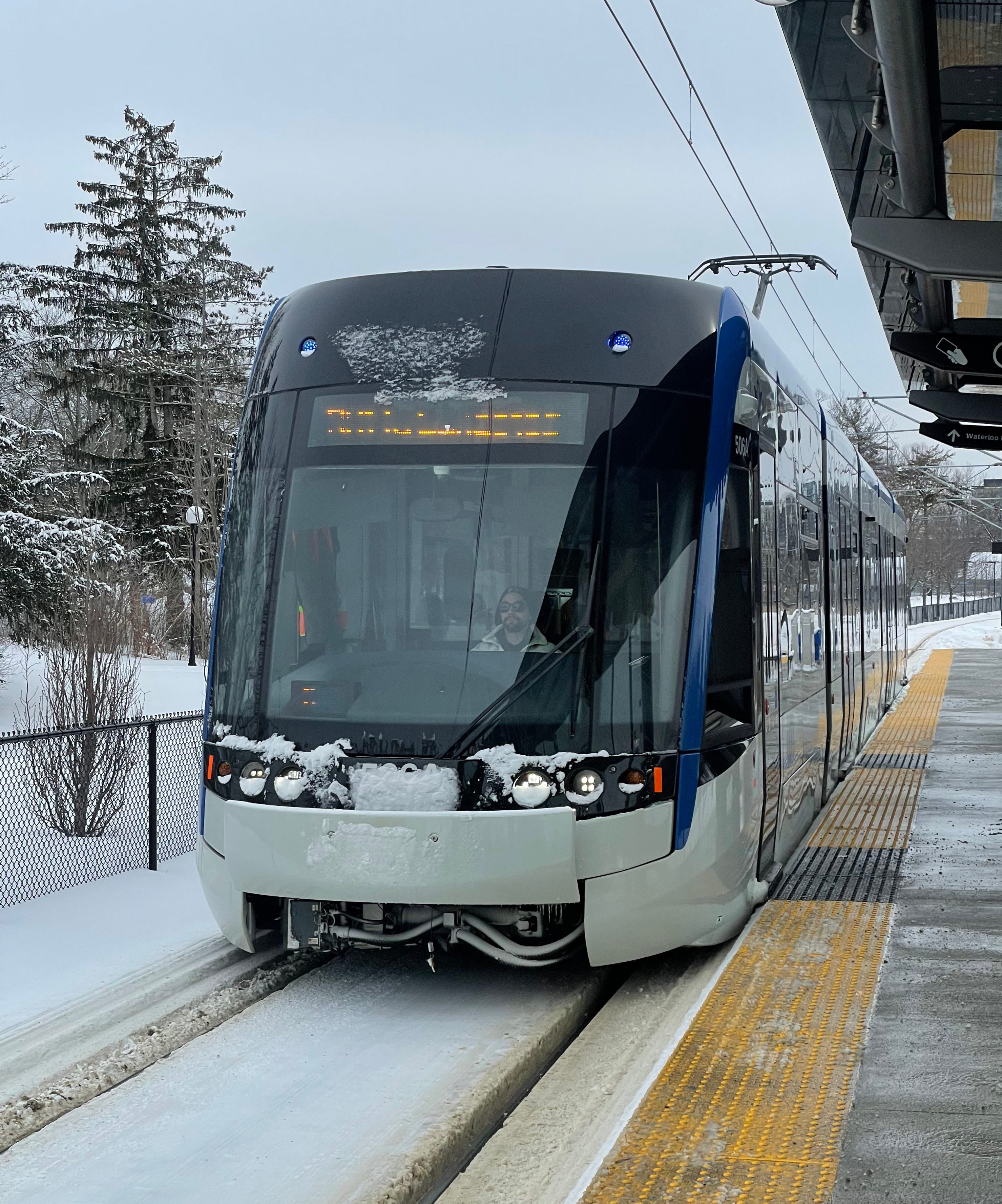
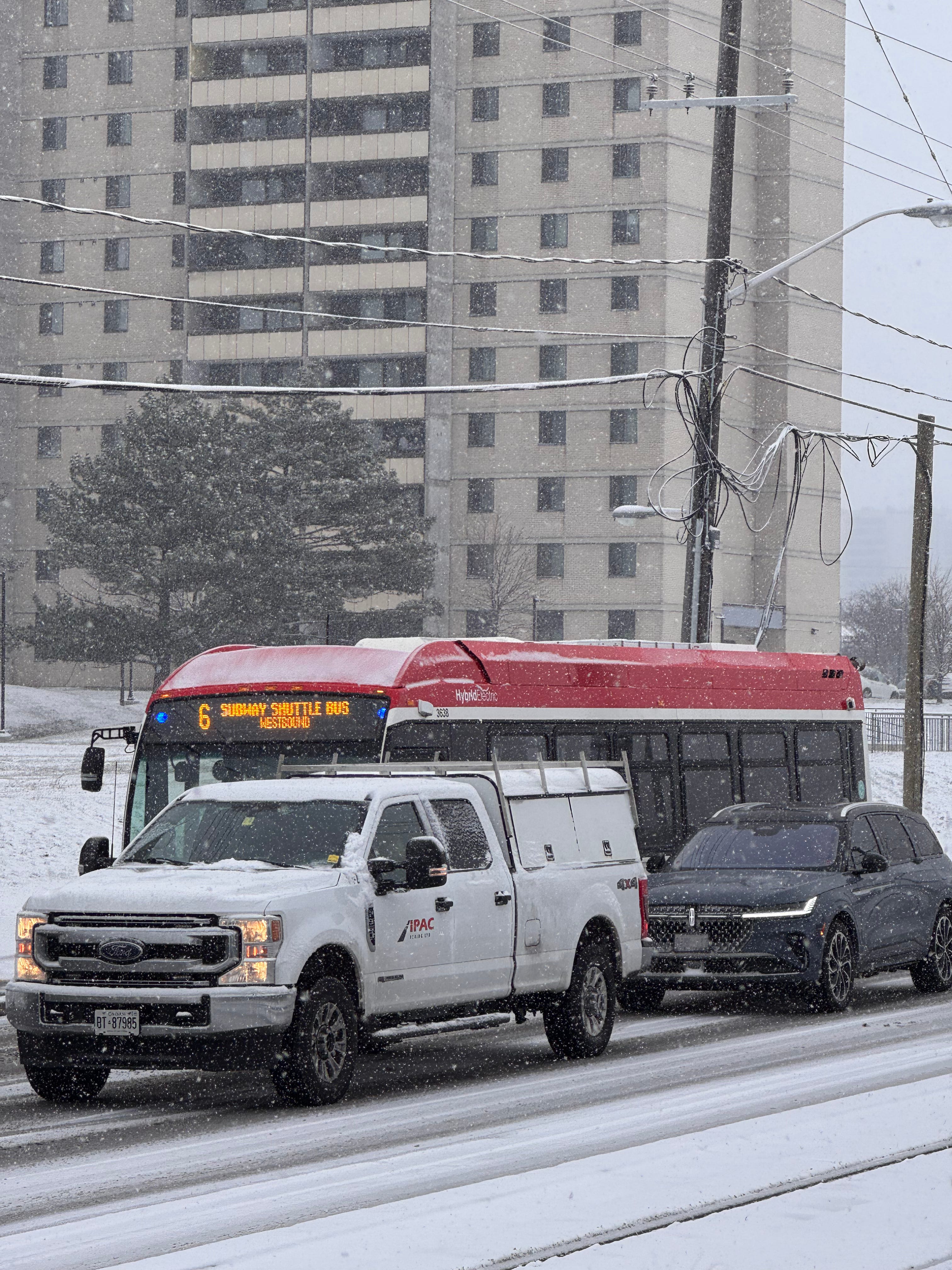
The regulation has been made so that Light Rail vehicles (meant to be faster and cover longer distances than streetcars) are largely forced to run under the same sort of limitations as the many streetcar lines in Toronto. But this is a major mistake; most of the speed caps implemented on Line 6 are at intersections. Here, the LRT is forced to slow down to a painfully slow 20 kilometres per hour out of fear of collisions or derailments.
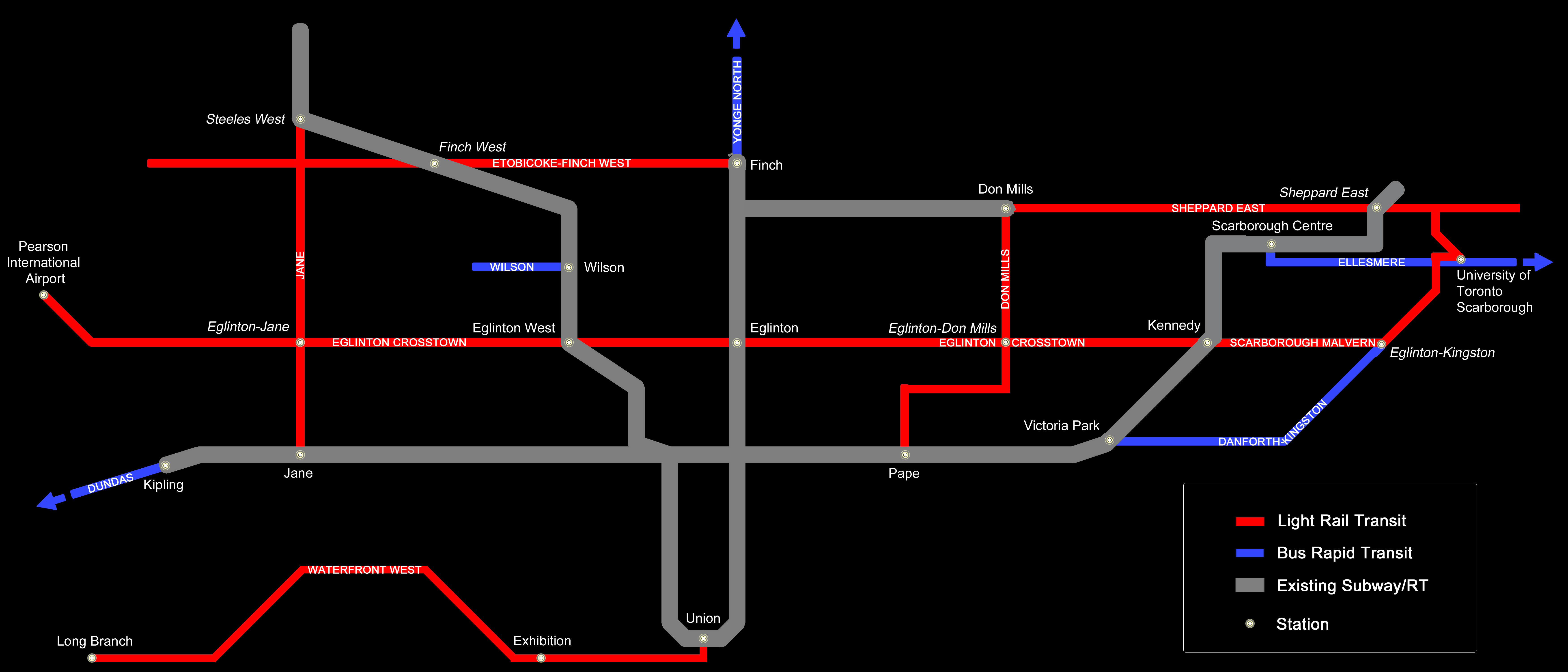
Finch West is, at its core, a remnant of a different era of transit planning in Toronto. The project emerged out of the controversial Transit City proposal, a time when LRT was positioned as a compromise solution rather than a fully embraced rapid transit mode. Many of the decision makers involved in shaping the project are no longer in government, but the outcomes of those choices are still very much with us today, and correcting them will not be simple.
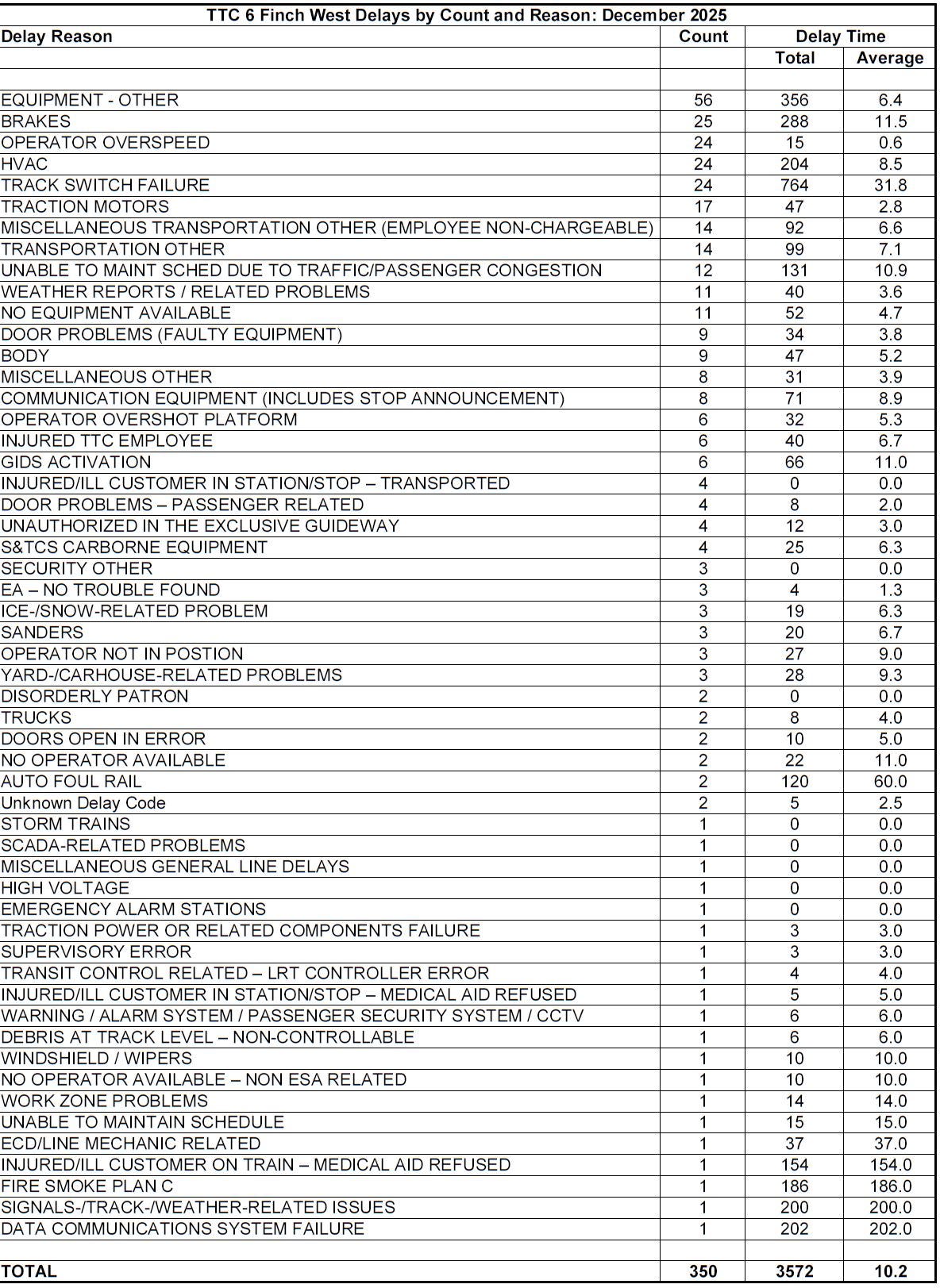
The problem at large is that with Line 5 Eglinton (also part of ‘Transit City’) LRT coming soon (having passed all major testing required by law), the insistence to run LRTs as streetcars would result in major issues, particularly on the street-running eastern side of the line to Scarborough. Yet another equity deserving area of the city that would be forced to receive worse service than others, even if they are getting a new line.
But there seems to be hope. I had for a while believed and hoped that, given the resistance to implementing signal priority, the opening of Lines 5 and 6 would be a wake-up call, or at least would turn up the pressure on the city to ‘bite the bullet’ and implement a technology that dozens of cities, large, massive, and small, have implemented with success. It seems that Line 5 is planned to implement TSP only IF trains are facing major delays. In other words, they will manually make the call to switch the system on or off rather than making the most of a technological investment that has already been made.
Toronto is not special (at least not in that way, I love the city. TSP is a clear necessity for all street-running rapid transit in the city. Beyond lines 5 & 6, our oh-so-forgotten, busy, crowded, and oh-so-essential streetcars, including those with LRT-like features like those along Spadina, St Clair, and Waterfront, stand to be revolutionized with TSP. And why not think further? What about the City’s RapidTO bus projects? There are so many opportunities! Most importantly: it’s a solution we can implement in weeks or months, not years upon years.
Toronto needs so much more rapid transit; this is true. Transit City was built on the premise that the ‘massive’ bargain of building LRTs as opposed to pricey subway lines; however, let’s not forget Line 5 will end up costing over 2x its initial price tag and generally speaking, much more expensive to build than what it costs other countries to build fast, automated, underground or elevated metro systems.
Ultimately, the more important question is how we want to serve Canada’s largest metropolitan region going forward. Toronto is building more transit than almost any other major city in North America, but capital investment alone is not enough. To actually see the benefits of these projects, speed and reliability must be treated as non-negotiable outcomes, not optional trade-offs.
If we are investing like never before in some of North America’s grandest, most impressive rapid transit projects. In 10, 20 years, our region will be completely unrecognizable from how revolutionary these investments will be.
But the opening of Line 6 and the looming launch of our long-awaited Line 5 must be a wake-up call for Toronto. Let’s not let our focus on grand capital projects make us forget how good we could have it, how life-changing these often forgotten and comparatively small operational improvements (i.e. TSP) can be.
Subscribe for free! Let me know your thoughts below. Lots more to come soon ↓
Great insight! It hits hard with some of the points you mentioned (esp. Spadina/Bathurst/Sheppard) being a user of the system myself.
What’s the solution to address the spacing between the stations?